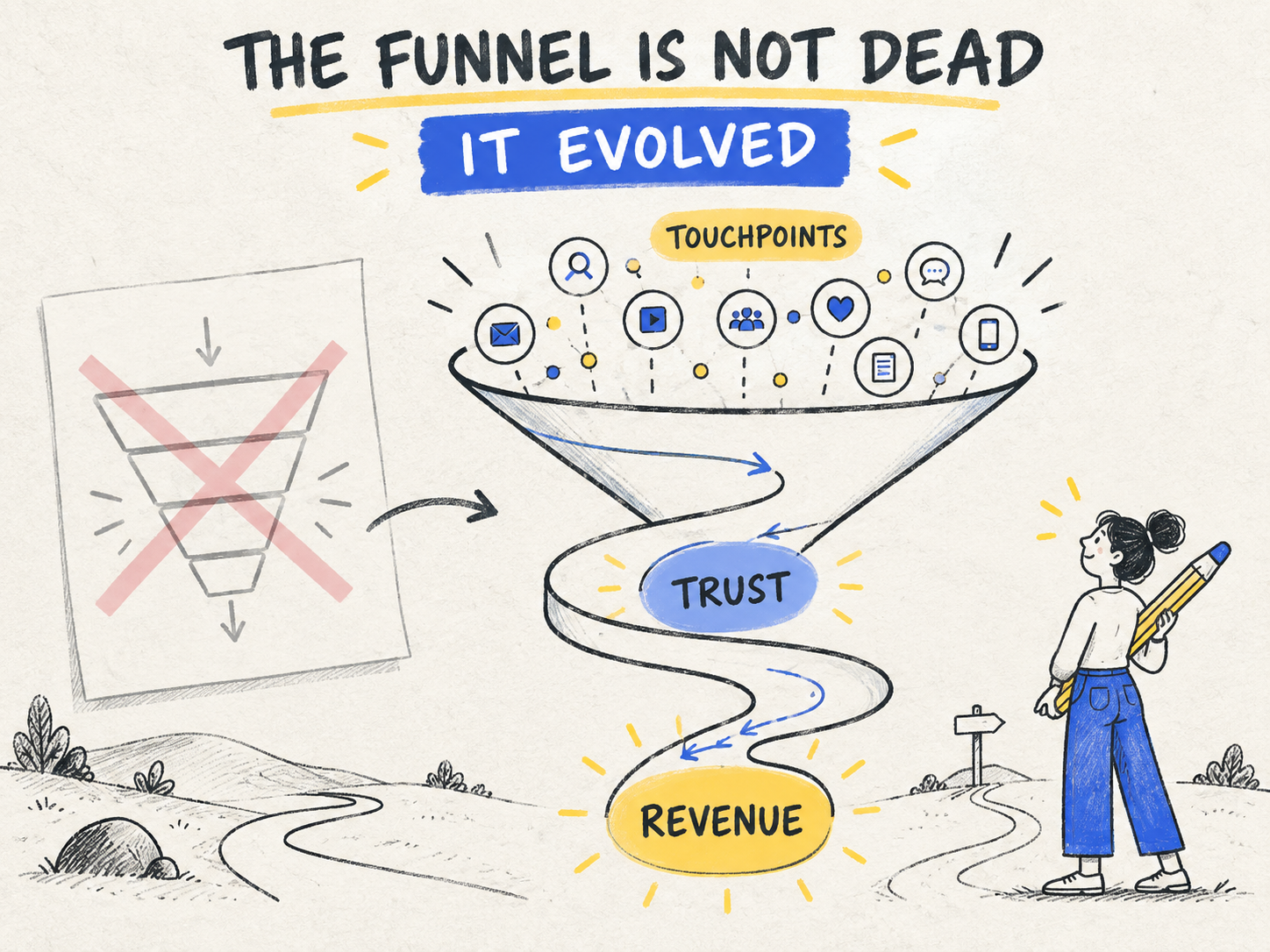
The Funnel Is Not Dead — It Just Evolved
Every few months a guru announces the funnel is dead. I've run 10 ventures across 5 industries, managed IDR 4B+ in ad budgets, and generated 300K+ qualified leads. Here's why they're wrong — and what the funnel actually looks like now.
Hook: everyone says funnels are dead. I've run 10 ventures across 5 industries, managed IDR 4B+ in ad budgets, and generated 300K+ qualified leads. Here's why they're wrong — and why the people telling you funnels are dead are usually the ones selling you a workaround.
The claim that never dies
Every few months a guru announces the funnel is dead. The customer journey has changed, they say. Buyers are smarter now. Attention spans are gone. So, stop building funnels and start… something else.
I get why it sells. "The funnel is dead" is a hook that stops the scroll, and the pitch that follows is almost always a tool or a formula that promises to replace structure with magic.
The problem is it's wrong. Not because funnels haven't changed — they absolutely have. It's wrong because the thing a funnel does has never been optional.
What a funnel actually is
Strip away the marketing jargon and a funnel is one idea: you move a stranger to a buyer through a series of deliberate steps, and you measure where they drop.
That is not a strategy you can choose to abandon. It's the physics of any transaction. Someone who doesn't know you (stranger) has to become someone who trusts you (exactly enough) before they hand over money. That transition has a shape. Engineers would call it a state machine; marketers call it a funnel.
So when someone says "funnels are dead," what they're really saying is one of two things:
- The specific funnel I was shown (buy traffic → land on a page → pitch → close) doesn't perform like it used to. True. It doesn't.
- I never had a real funnel — I had a landing page with ads in front of it, and now that's not enough. Also true — but that was never a funnel.
Both statements are about weak execution wearing a costume of bold insight.
How the funnel actually evolved
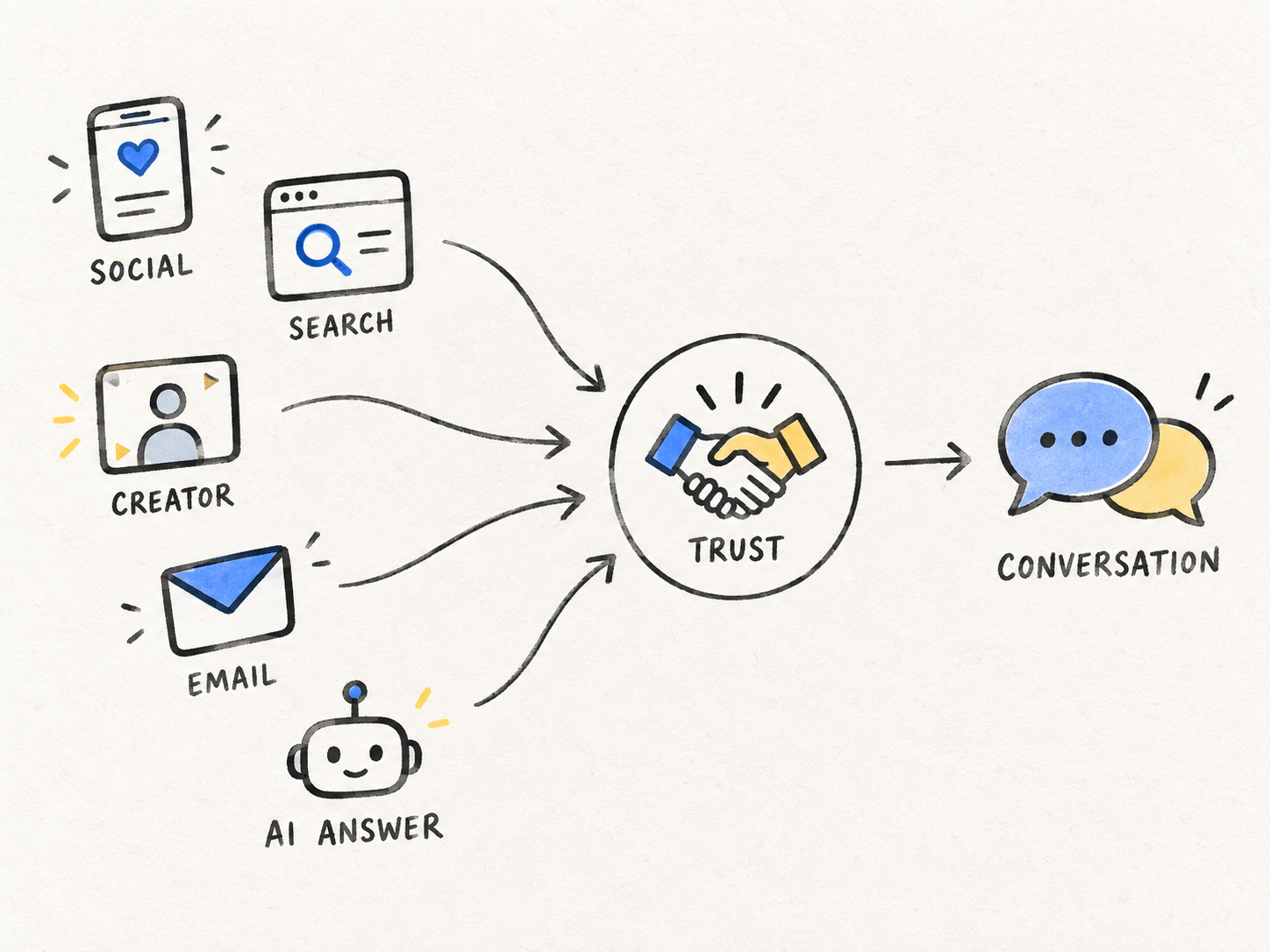
I've watched the shape bend across the ventures I run and the clients I've backed — Wall Street English at Rp156B revenue all-time high, Hacktiv8 at +200% registration growth, and across 300+ business owners we've supported. The funnel isn't gone. It's gotten more complex at the top and faster at the bottom.
The top got wider and messier. Attention used to be a line you bought with ad spend. Today your first touchpoint might be a viral thread on X, a comment thread, an AI answer box, a founder's personal brand, or a mention in someone's newsletter. Strangers meet you in fragments, not through one clean landing page. So awareness is no longer a single gate — it's a cloud of micro-touches.
The middle got trust-hungrier. With AI and cheap content everywhere, authority is commoditized. The people who trust you do so because of proof and personal experience, not because your site looked credible. This is exactly why everything I publish is rooted in a real decision from an actual venture — not generic theory. Trust now has to be earned in the open, and that's a multi-touch job.
The bottom got sharper. When someone is actually ready to buy, they make the decision faster than ever — IF you've done the trust-building above. The closing step didn't die; it got shorter and more surgical.
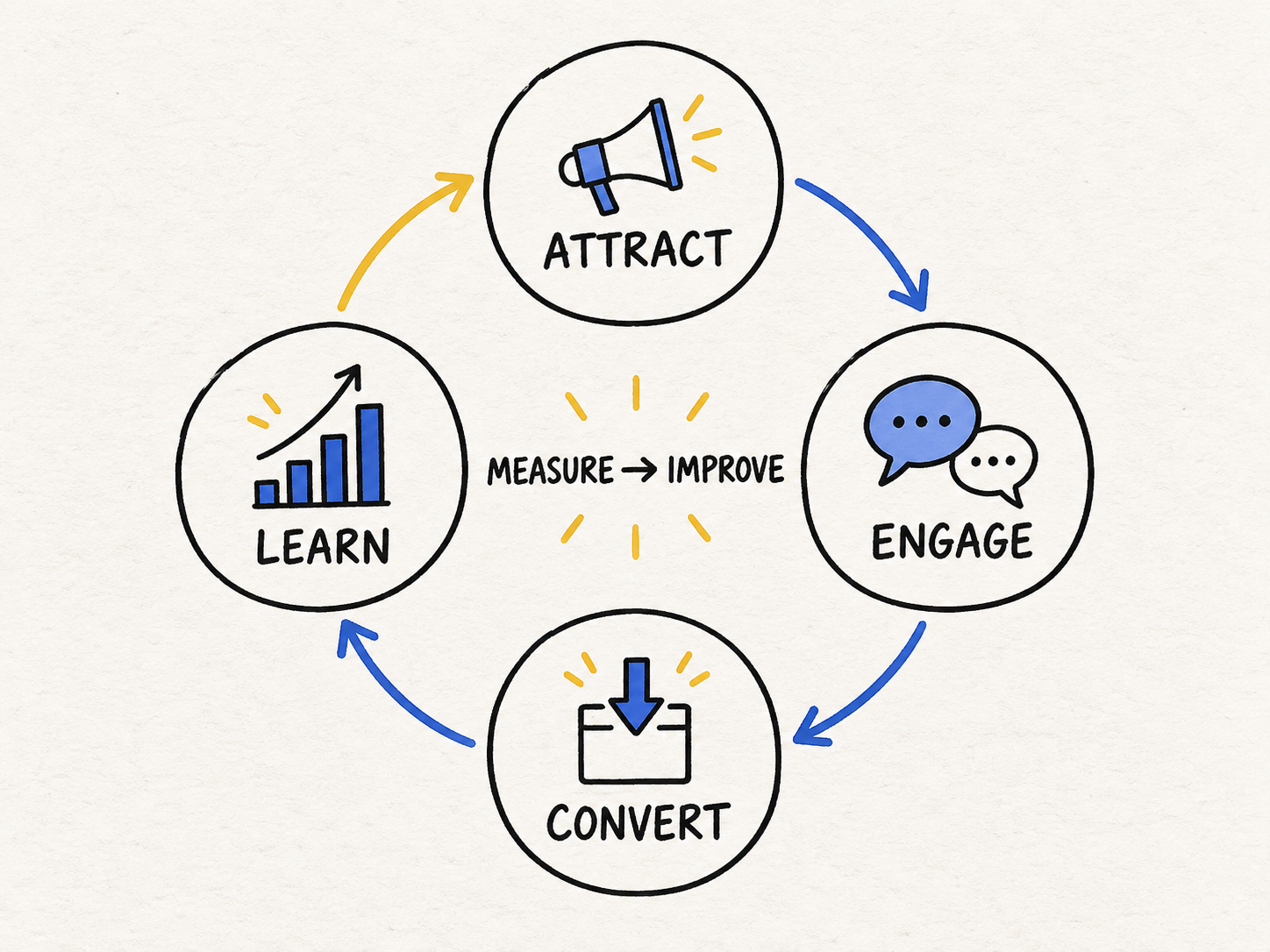
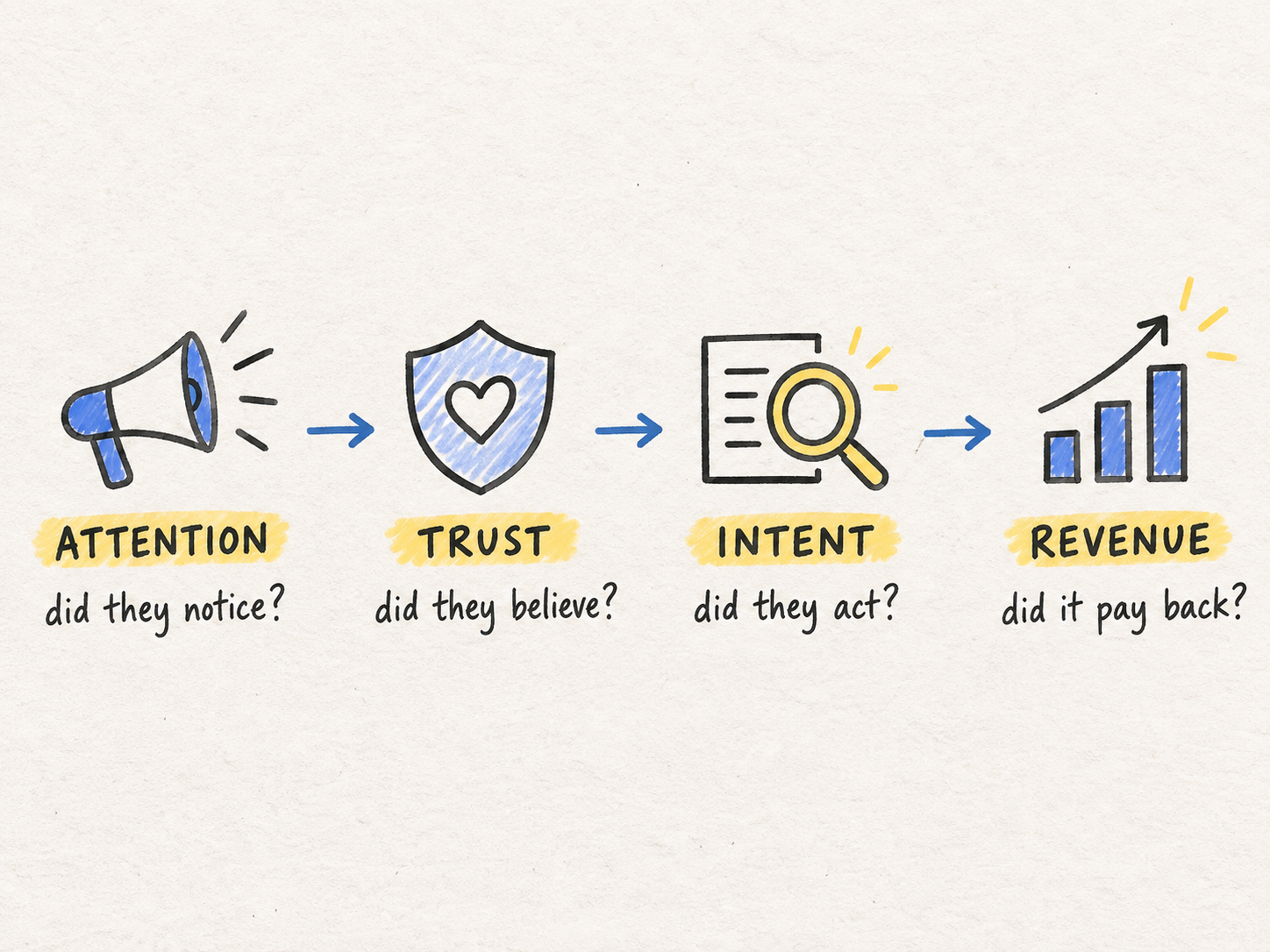
Here's the uncomfortable part most funnel-doomers skip: the more the world fragments, the more you need a system to sequence it. Chaos is not a strategy. Ten ventures taught me that the operator who wins isn't the one with the flashiest content — it's the one with a repeatable pipeline that turns touchpoints into revenue and tracks every stage.
The real "funnel is dead" translation
Repackage it honestly and the claim becomes useful:
Funnels aren't dead. But the single-page funnel with cold ad traffic is dying, and "post more content" with no pipeline is a hobby, not a business.
Both halves are true. The conclusion isn't "stop building funnels." It's "build a modern one — a system of touchpoints, trust, and tracking that sequences a stranger into a buyer." That's the version I run.
What a modern funnel looks like (the operating side)
- Attract (the wide end). Personal brand, threads, carousels, short-form — content that stops the scroll in your actual voice. Rooted in experience, not recycled tips.
- Engage (the trust layer). Case studies, breakdowns, behind-the-build stories. Proof, not promises.
- Convert (the sharp end). A specific, high-value lead magnet that filters for real buyers — not "download our free PDF of generic tips" — then a clear offer, then a conversation.
Every stage measurable. Every handoff tracked. That's the operating system — not a page, not a tool, a system that runs while I'm running the other nine ventures.
The part I actually care about
I don't say this to sell you a funnel course. I say it because I've seen founders burn millions of rupiah on the opposite advice: chase whatever's shiny, drop the structure, and hope virality replaces revenue.
Virality never replaced revenue. It just changed which ads you buy.
So here's the question you should be asking: not "is the funnel dead?" but "is my pipeline a system, or am I just posting and praying?"
Your move
Stop debating the metaphor and audit your actual pipeline. I turned this into a Funnel OS diagnostic — the same pipeline audit that sits behind 300K+ leads and a $12M track record. It checks whether your funnel is a real system or a landing page with ads in front of it.
Start with the free diagnostic at your diagnostic route — it maps intent, acquisition framework, channels, and actionables. That's the filter I use to figure out who's actually ready to build — and who's just collecting advice.
Reported figures reflect contributions to team and client outcomes across Aditya's engagements, not sole-authored results. This is an opinion piece grounded in those engagements.

Aditya Indra Bayu
·Fractional CMO · InfinitiLabsAditya builds and operates commercial growth engines from the inside. He connects positioning, funnels, paid media, and sales telemetry until the business finds durable revenue.