Growth Curve Method: content routes for 360 marketing in 2026
The Growth Curve Method is Aditya's content marketing framework for building authority, engagement, visibility, and conversion through connected content. The 2026 version keeps the original logic: pillar content, supporting content, guideways, cadence, and optimization. It adds AI-assisted production, first-party signal loops, and revenue-quality measurement.
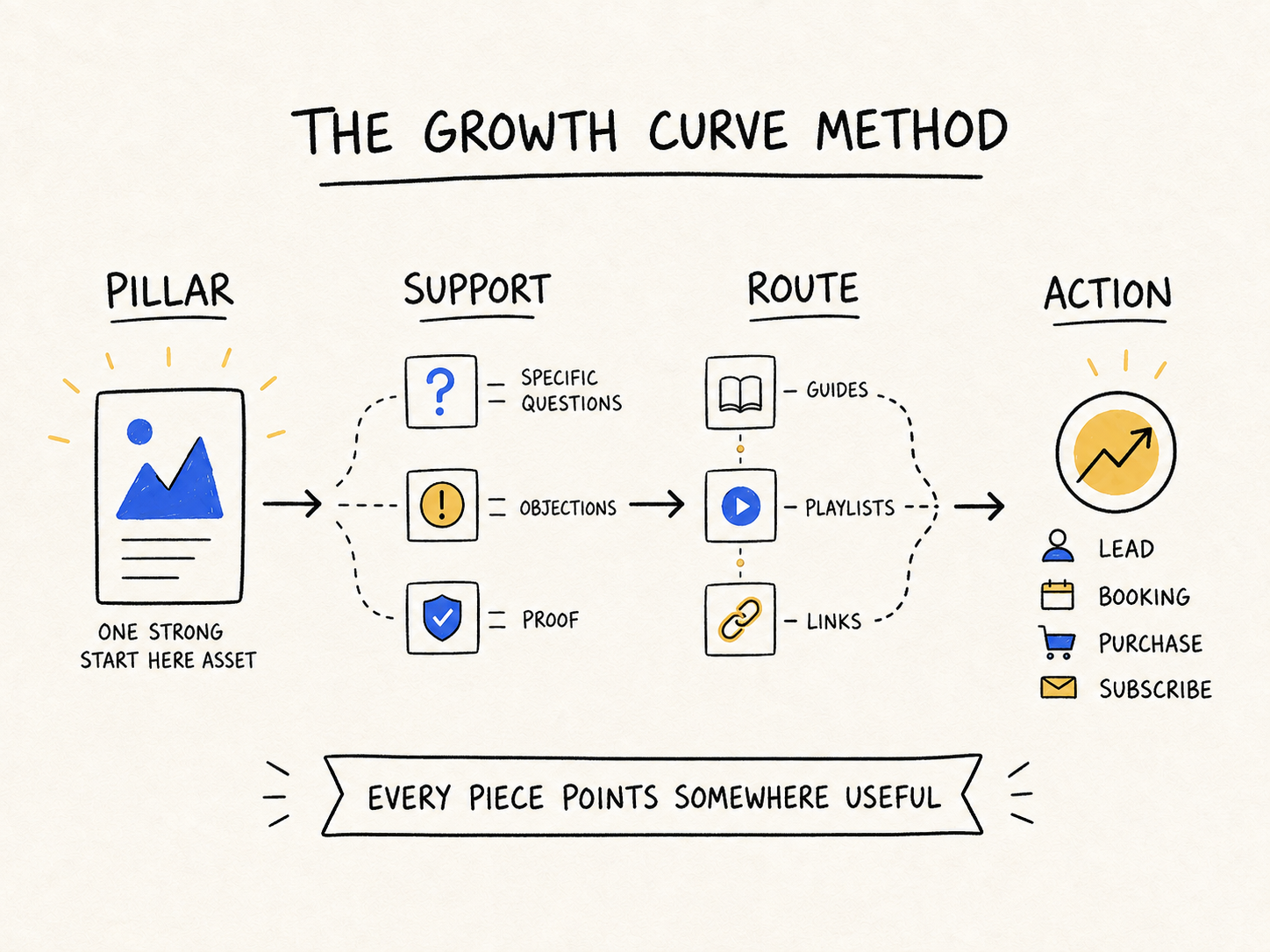
- 01 · Pillar. The core content that anchors audience learning.
- 02 · Support. Specific content pieces that deepen the main topic.
- 03 · Route. Guides, playlists, highlights, and links that move attention.
- 04 · Optimize. Data updates the pillar, cadence, and conversion path.
The original problem
Most brands jump straight into media buying. Meta Ads, Google Ads, LinkedIn Ads, TikTok Ads. The logic feels simple: buy attention, push traffic, wait for leads.
That logic gets expensive when attention spans shrink and auction prices rise. In that market, the business with deeper pockets wins the bidding war. The smaller operator gets priced out or forced into weak leads.
Aditya built the Growth Curve Method after a health startup engagement forced a different strategy. The team had to compete for traffic without relying only on paid media. The answer was high-quality content marketing structured like a customer journey funnel.
What changed
The new system replaced random posting with connected content. It treated content as a route, not a feed. The result was stronger organic signal, cheaper paid traffic, more touchpoints, and more qualified leads.
Definition
Growth Curve Method is a structured content marketing plan that connects one strong Content Pillar with a network of Supporting Content and Content Routes. The goal is to make the audience understand the brand's expertise, move through the customer journey, and return to the right content at the right time.
The method is called a curve because growth is gradual. Authority does not spike overnight. It compounds when the audience keeps finding clear, useful, connected content from the same brand.
Operator rule: the point is not to post more. The point is to make every post point somewhere useful inside the brand's content ecosystem.
Step 1: define the Content Pillar
The Content Pillar is the foundation. In the Growth Curve Method, a pillar is not just a category. It is a core topic with a customer-journey objective.
Aditya groups pillar objectives into 3 roles:
- Attract. A pillar that pulls attention from strangers and gives them a reason to follow or subscribe.
- Engage. A pillar that farms interaction through beliefs, benefits, features, problem-solving, and proof.
- Convert. A pillar that guides action. Purchase is only one option. Registration, ebook download, consultation, or demo request can also be conversion.
A good pillar should be evergreen, comprehensive, and high value. It should feel like a "Start Here" asset for the topic. For a fitness brand, that could be "Ultimate Beginner's Guide to Home Workout." For a clinic, it could be a complete guide to braces, veneer, whitening, or first dental consultation.
Step 2: build Supporting Content
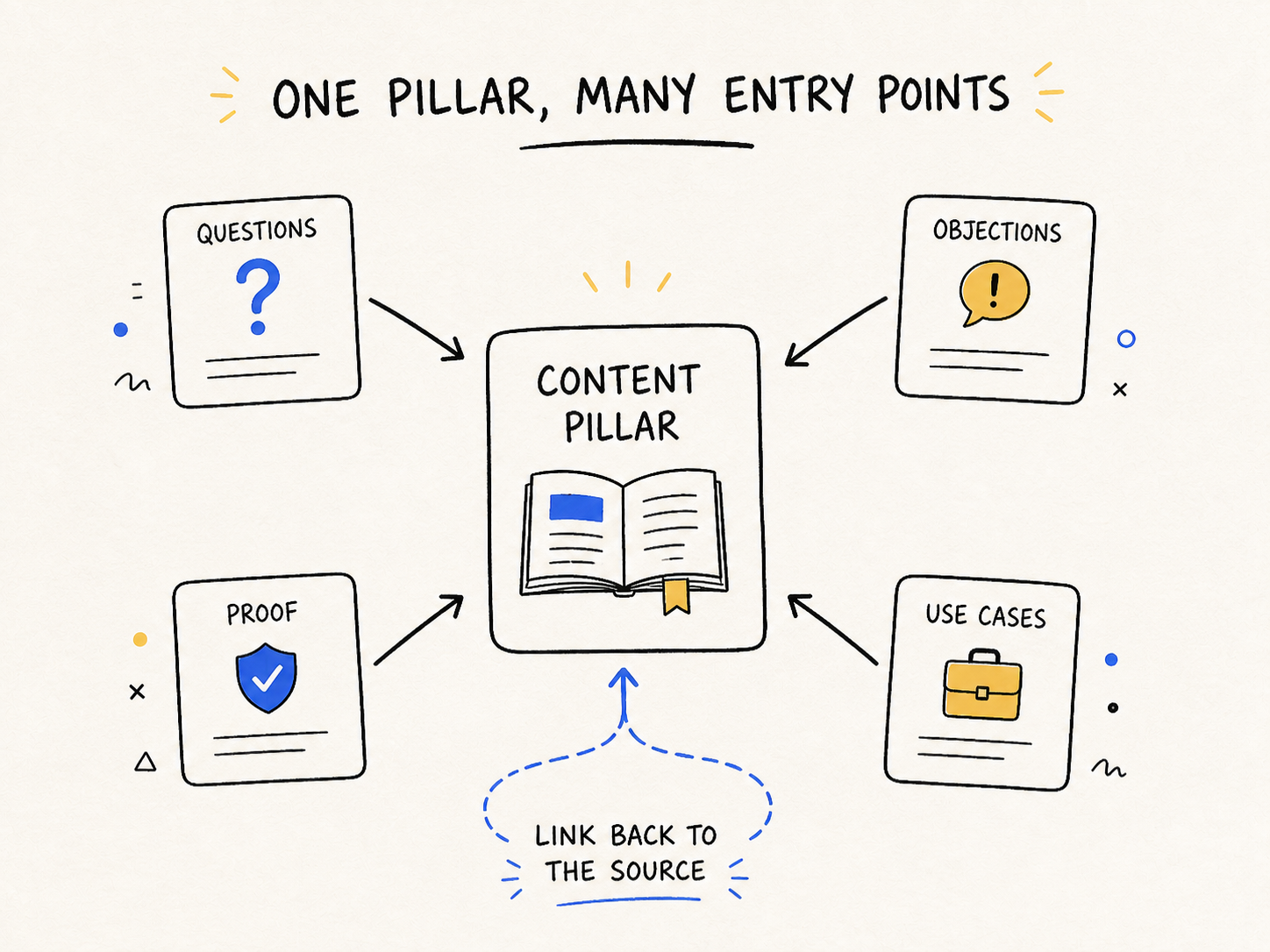
Supporting Content takes the main pillar and breaks it into sharper, smaller pieces. It can answer one question, solve one objection, explain one feature, show one proof point, or demonstrate one use case.
If the pillar is "Ultimate Beginner's Guide to Home Workout," the supporting pieces could be bodyweight exercises, post-workout smoothie recipes, motivation tips, injury prevention, beginner schedules, and equipment guides.
Each piece should guide the audience back to the pillar. The caption, CTA, link, highlight, playlist, or internal reference should make the next step obvious.
Step 3: create Content Routes and Guideways
This is the part most brands skip. They publish useful content, but the audience gets lost after one post.
Growth Curve Method creates guideways: Instagram Guides, YouTube playlists, pinned posts, profile highlights, blog clusters, internal links, newsletter sequences, resource hubs, and content calendars that group related pieces.
The route matters because attention is fragile. Once someone cares about a topic, the brand should not make them search manually. The next useful piece should be visible.
- Attract · Discovery content. Hooks, short video, carousel, search content, creator clips, and shareable insights.
- Engage · Depth content. Explainers, proof, beliefs, FAQs, comparisons, objections, and community prompts.
- Convert · Action content. Consultation prompts, offer pages, case studies, booking paths, demos, and lead magnets.
- Retain · Loop content. Email, remarketing, customer education, referral prompts, and product feedback loops.
Step 4: set cadence and frequency
Supporting Content should not be dumped all at once. It should be released on a rhythm the audience can recognize.
The original framework recommends a steady frequency, such as 2 to 3 supporting posts per week, then grouping them into guideways after enough pieces exist. The rhythm teaches the audience what the account is about. It also gives the algorithm repeated signals around the same expertise area.
In 2026, cadence also needs format discipline. One pillar can produce a long-form article, LinkedIn post, carousel, Reel, YouTube Short, email, and retargeting copy. AI can help produce variants, but the operator still has to protect the route. More output without routing only creates noise.
Step 5: analyze and optimize
The final step is continuous optimization. Track which supporting pieces create shares, saves, qualified leads, booked calls, or stronger retargeting pools. Then update the Content Pillar with new data, examples, and objections.
If an abs workout carousel gets high saves, create adjacent pieces. If a smoothie video underperforms, change the hook, format, CTA, or audience route. If a clinic content pillar generates many consultation questions, add those questions into the page or FAQ.
Growth Curve Method is not a one-time content calendar. It is a living content ecosystem.
The 2026 360 gameplay
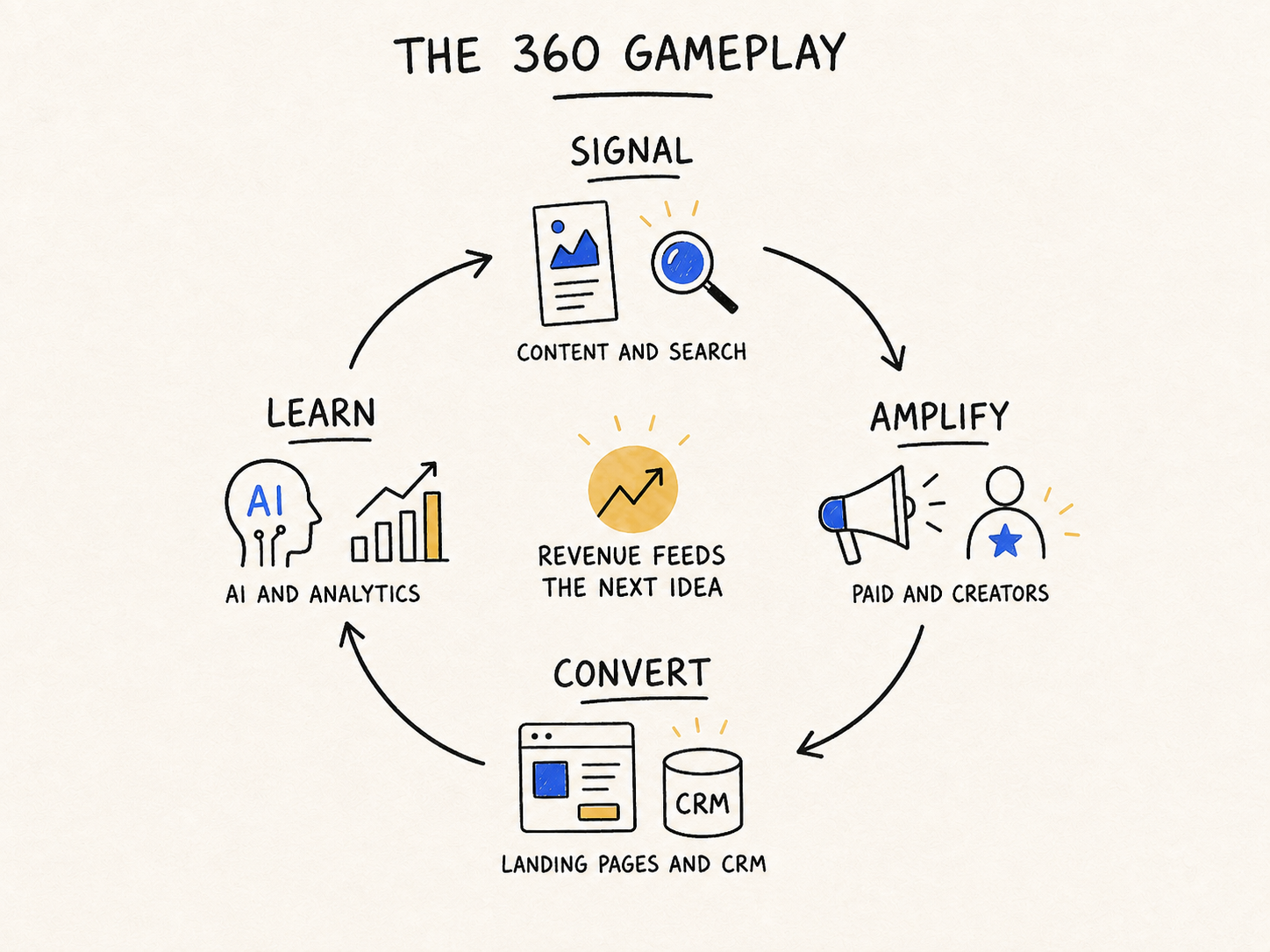
The 2026 update is about connecting the original method to a full digital marketing system. Content creates the signal. Paid media amplifies the signal. CRM tells the team which signal became revenue. AI accelerates production and analysis. Search and AEO make the pillar findable. Retargeting and email keep the route alive after the first touch.
- Signal · Content and search. Pillars, supporting posts, SEO, AEO, social proof, and high-intent queries.
- Amplify · Paid and creator. Meta, Google, TikTok, LinkedIn, creators, and retargeting mapped to route stages.
- Convert · Landing and CRM. Landing pages, WhatsApp, forms, booking paths, lead scoring, and sales follow-up.
- Learn · AI and analytics. Topic clustering, objection mining, creative variants, cohort quality, and revenue feedback.
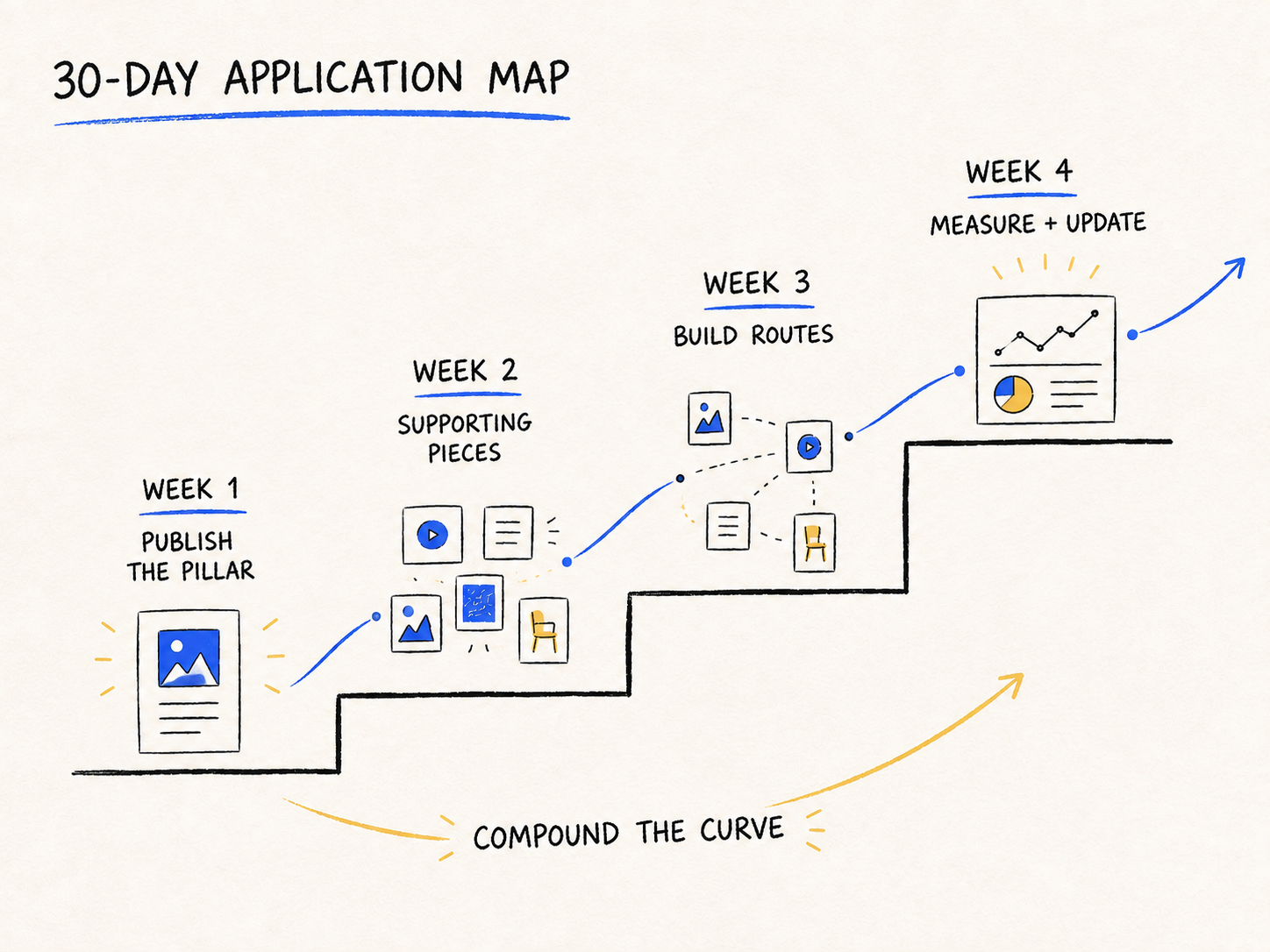
A 30-day application map
- Week 1 · Build the pillar. Choose Attract, Engage, or Convert. Publish the "Start Here" asset.
- Week 2 · Publish supporting pieces. Break the pillar into specific questions, objections, examples, and proof points.
- Week 3 · Create routes. Pin the pillar, build guides, playlists, highlights, blog links, and email pathways.
- Week 4 · Measure and update. Review saves, shares, route clicks, lead quality, CPL, and conversion signals.
- Month 2+ · Compound the curve. Refresh the pillar, expand clusters, promote winners, and build deeper conversion assets.
Research notes
The 2026 update is informed by the current shift toward AI-assisted marketing workflows, privacy-first data use, creator and video spend, and measurement beyond last-click attribution. Useful references include IAB's 2026 State of Data report, IAB's 2026 Video Ad Spend report, Think with Google, and McKinsey's growth, marketing, and sales research.
What carried forward
The original Growth Curve Method was never about posting for the sake of posting. It was about giving the audience a route: from attention, to understanding, to trust, to action.
That is even more important in 2026. AI can create more content. Paid media can buy more reach. But if the audience cannot see the route, the brand is still leaving growth on the table.
Content does not compound because it exists. It compounds because every piece helps the audience know where to go next.
This article is a public 2026 adaptation of Aditya's original Growth Curve Method framework for Growthlab. Reported figures reflect contributions to team outcomes during the engagement described, not sole-authored results.

Aditya Indra Bayu
·Fractional CMO · InfinitiLabsAditya builds and operates commercial growth engines from the inside. He connects positioning, funnels, paid media, and sales telemetry until the business finds durable revenue.